車検
Shaken
A full national inspection: first at 3 years, then every 2 years. A car that fails must be repaired before it's legal to drive.
Book your own checkup twice a year, and fix things while they're small.
A plain-English guide for everyday drivers
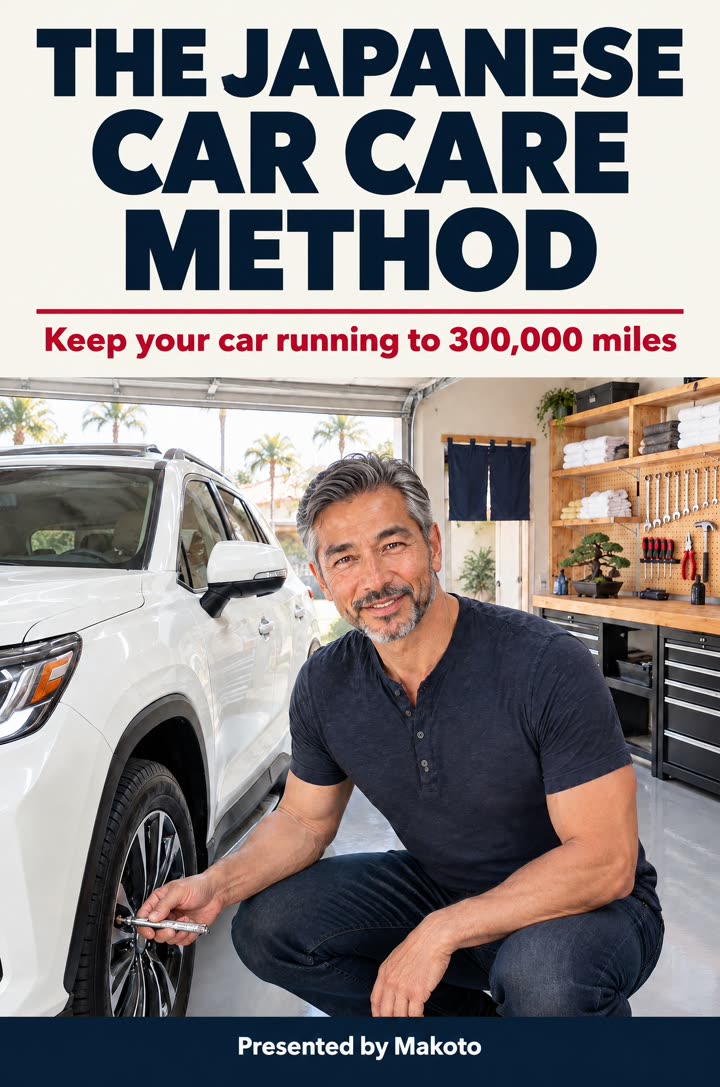
A schedule that tells you what's due, a 10-minute monthly check, and pocket cards for the service desk. Built on three habits from Japan's car system, written for people who are not car people.
Not ready to buy? The Due vs. Upsell card from the toolkit is at the bottom of this page. It's free. Save it to your phone before your next oil change.
The service desk problem
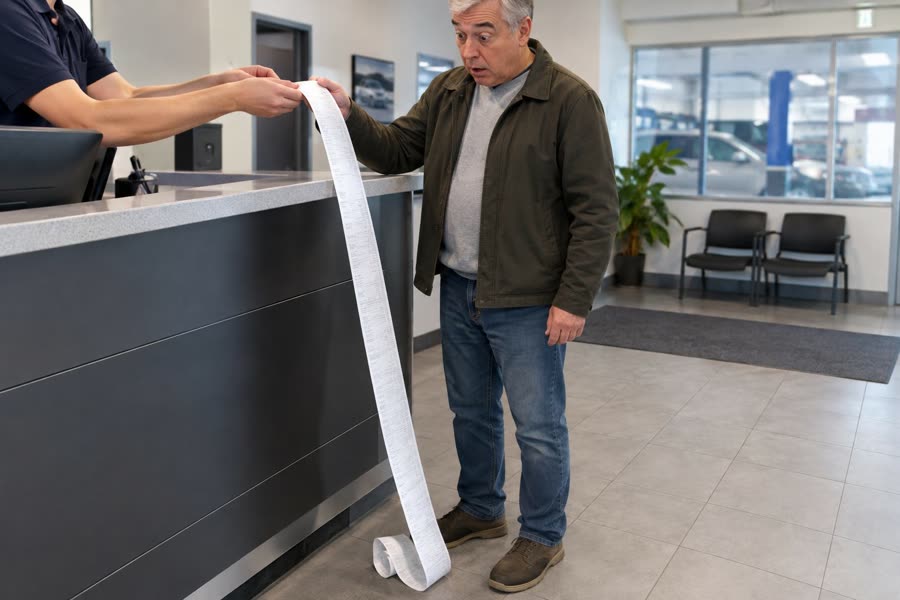
The owner of a 2016 Honda Odyssey with 59,000 miles went in for an oil change. The quote came back with a power steering flush, a coolant flush and a fuel induction service. Honda's own service statement calls work like that unnecessary under normal conditions.
Most of us can't tell what's due from what's extra. So we pay for things we don't need, and we skip things that really are due, until a small problem becomes a big bill.
Source: The Charlotte Ledger, 28 Feb 2022. Honda's position statement as reported there.
Why Japan
In Japan, small problems can't hide for long. The law makes owners inspect, check and record. You don't need the law. You can copy the three habits it creates.
A full national inspection: first at 3 years, then every 2 years. A car that fails must be repaired before it's legal to drive.
Book your own checkup twice a year, and fix things while they're small.
The owner's routine check. Japanese drivers are expected to look over their own car: tires, lights, fluids, brakes.
A 10-minute walk around your car, once a month, in your own driveway.
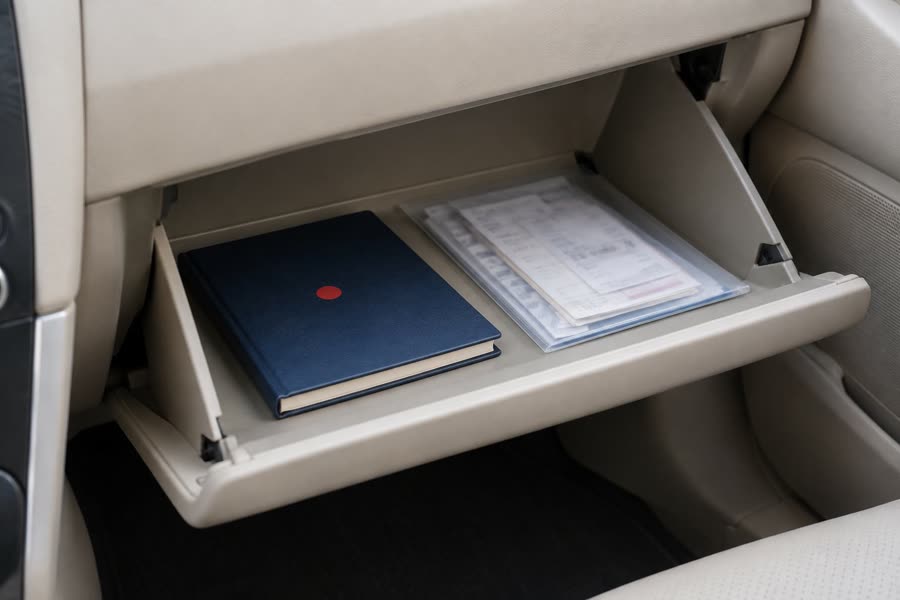
The maintenance record book that stays with the car. Since 2014, the inspection certificate notes whether it shows inspections.
A notebook in the glovebox. It keeps you on schedule and helps when you sell.
Japanese owners don't keep cars forever. Inspections cost money and taxes rise after 13 years, so many cars are sold young. The book doesn't claim the system makes cars last longer. It takes the habits, which work on any car, in any country.
What the book does for you
| When | What to do |
|---|---|
| Every 5,000 mi | Oil and filter. Rotate tires. |
| Every 15,000 mi | Cabin air filter. |
| Every 30,000 mi | Engine air filter. |
| 60,000 mi | Transmission fluid. First drive belt check. |
| 100,000 mi | First coolant change. Spark plugs (check your manual). |
| Every 2 years | Brake fluid, whatever the miles. |
From the careful (severe-use) column. The book adds the rows that fit your car, up to 300,000 miles. Your owner's manual always wins.
All normal? Write the date and "OK" in your record book.
Don't take our word for it
The Due vs. Upsell card isn't opinion. It follows what the car companies tell their own dealers.
"These services are unnecessary and create unneeded expenses for your customers."
"No reason to perform engine oil system flushing."
GM "does not endorse, support or acknowledge the need for fuel injector cleaning as a preventative maintenance procedure."
Your next service visit
You walk in with the mileage written down. You know what's due because you looked it up at home. The advisor suggests a throttle body cleaning. You ask where it's listed for your mileage, and the conversation is over. You pay for what you came in for.
At home, you add one line to your record book. Years from now, the buyer of your car reads every line of it.
| Date | Miles | Work | Paid |
|---|---|---|---|
| Mar 2027 | 84,210 | Oil and filter. Tires rotated (marks checked). Declined: fuel induction service. | $89 |
| Apr 2027 | 85,030 | Monthly check. Front left tire 4 psi low, filled. | $0 |
| Sep 2027 | 89,600 | Brake fluid exchange (due by time). Engine air filter, done myself. | $158 |
Example entries, to show the format.
Inside the book
Every chapter opens with the short answer, so you can read it in a minute and come back for the detail. Start Here tells you which chapters to read first for your car.

Makoto is an AI, and the book says so on page one. He has no shop stories, so the book doesn't invent any.
What you get instead is sources. The facts come from owner's manuals, the carmakers' own service statements, and official Japanese sources such as the Road Transport Vehicle Act and Japan's transport ministry. Every source and image is listed in the Credits, so you can check any number yourself.
Questions
Yes. It's written for people who aren't. Plain English, short chapters, and the short answer first in every chapter. The only tool you need is a tire gauge.
No. Chapter 11 is a catch-up plan for high-mileage cars and cars with an unknown past. It puts the work in the right order: safety first, then the cheap basics, then the time-based fluids and the big-ticket items. It also covers when to walk away from a used car.
Yes. The habits come from Japan, but they work on any car. The schedule is set by your car's type (how it's built), not its badge, so it covers an F-150 as well as a Camry or a CR-V.
Never. The schedule sits at the careful end of your manual, and when the two differ, your manual wins.
Some of it, in pieces. The book puts it in one order, with one schedule for your car type and printable cards for the glovebox. You won't be searching videos at the service desk.
Two PDFs, delivered by Gumroad right after you pay: the full book, which reads well on a phone, and the printable toolkit. Print the cards once and keep them in the car.
Ask for a refund within 30 days and you'll get your money back.
Everything you get
One payment. Instant download.
Get it on GumroadIn the Odyssey story above, the extras added $471 to one oil change. Turning down a single one of them pays for this book several times over.
The 30-day refund. Read it. Take the cards to your next service. If the book doesn't earn its place in your glovebox, ask for a refund within 30 days. You'll get your money back, and you can keep the free card.
Free, as promised
Screenshot it and keep it on your phone. It's one of the four pocket cards in the toolkit.
| Pushed at the counter | Really due? |
|---|---|
| Fuel induction / injector cleaning | Only for a diagnosed problem |
| Throttle body cleaning | Only for a real symptom |
| Engine flush | Never as maintenance |
| Power steering flush | Rarely; many cars have no fluid |
| Coolant flush | Drain-and-fill at manual interval |
| Transmission flush | Drain-and-fill only |
| Brake fluid exchange | Yes, on its time schedule |
| Nitrogen tire fill | No; air is about 80% nitrogen |
| Air filters at high prices | Do it yourself in minutes |
| "Your fluid looks dirty" | Due by time or miles, not color |
General guidance. Check your owner's manual; your manual wins.
The full schedule, all four cards and the catch-up plan.
Get the book and toolkit · $27 Instant PDF download · 30-day refund